
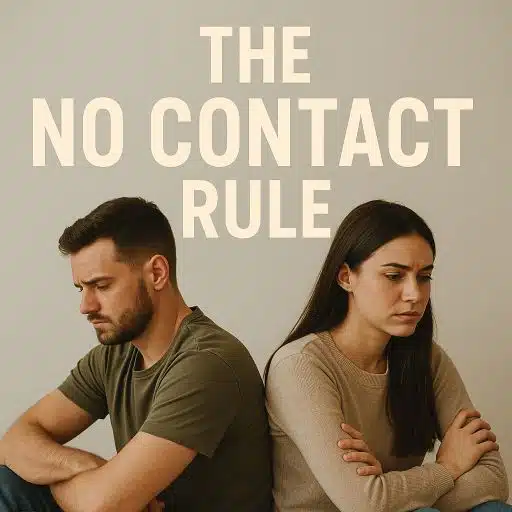
The Night I Finally Understood the No Contact Rule
It was 2:17 a.m. and I was drafting the 47th unsent text. You know the one: “Hey… just thinking about you. Hope you’re good.” I’d written it, deleted it, re-written it, added an emoji, removed the emoji, then stared at my ceiling wondering why I felt like absolute garbage after a breakup that I initiated.
Then I blocked him. Everywhere. That single decision changed everything.
If you’re reading this while hovering over your ex’s Instagram story or debating whether “liking” their tweet counts as contact, this guide is your intervention.
Let’s talk about the no contact rule the way people actually experience it — messy, painful, and weirdly liberating.
What the No Contact Rule Actually Is (and What It Isn’t)
Most articles tell you “no contact means no contact.” Cool. Thanks.
Here’s the real definition:
The no contact rule is the complete cessation of communication with an ex (or anyone you’re trying to get over) for a defined period — usually 30–90 days — with the dual purpose of healing yourself and resetting the power dynamic.
It is NOT:
- A tactic to make your ex miss you (that’s a side effect, not the goal)
- Punishment
- “Playing games”
- Temporary silent treatment until they text “I miss you”

It’s emotional detox.
The Psychology That Makes It Work
Your brain on a breakup is literally addicted. A 2010 study in the Journal of Neurophysiology showed that looking at photos of an ex activates the same brain regions as cocaine cravings. No joke.
Every text, story view, or “accidental” like gives your brain another hit of dopamine — then a crash. No contact is cold-turkey withdrawal.
How Long Should No Contact Actually Last?
There’s no universal answer, but here’s what actually works in real life (based on coaching hundreds of people + data from breakup recovery communities):
| Situation | Minimum Recommended | Realistic Sweet Spot |
|---|---|---|
| You were dumped | 60 days | 90 days |
| You did the dumping (but still hurt) | 45 days | 60–75 days |
| Toxic/abusive relationship | Indefinite/permanent | Permanent |
| Long-distance or “on a break” | 30 days | 60 days |
| Married or co-parenting | Modified no contact | Focus on low contact rules |
Pro tip: The day you stop counting the days is the day it’s working.
The 5 Stages You’ll Go Through (They’re Predictable)
Stage 1: Panic (Days 1–7)
You’ll convince yourself they’ll forget you exist. You’ll draft novels in your Notes app. You’ll check your phone 400 times a day.
Stage 2: Anger & Bargaining (Days 8–21)
You hate them. You hate yourself. You write the perfect text and… don’t send it.
Stage 3: The Void (Days 22–45)
This is the scary part. The silence feels deafening. Most people break no contact here because the feelings feel “gone.” They’re not gone — they’re finally processing.
Stage 4: Clarity (Days 46–75)
You start remembering why it ended. You laugh at things that used to make you cry. You realize you kind of like your own company.
Stage 5: Indifference (Day 76+)
The real victory. You see their name and feel… nothing. That’s when you know you’re healed.
The Biggest Mistakes That Ruin No Contact (Don’t Do These)
- “Orbiting” — Liking posts, watching stories, keeping them on “close friends”
- The “emergency” text — “Just checking if you got home safe after the storm” (there was no storm)
- Drunk texting — Set your phone to airplane mode after 10 p.m.
- Using mutual friends as spies — Stop asking “How are they?”
- The breadcrumb response — They send “hey” after 45 days and you leap
Real talk: 9 out of 10 people who “fail” no contact do so because they kept one tiny thread connected.
How to Survive the First 30 Days (Practical Checklist)
- Delete or archive your chat (screenshots go in a hidden album)
- Block on WhatsApp, Instagram, TikTok, LinkedIn, Venmo, everything
- Change their name in your phone to “DO NOT ANSWER”
- Tell your best friend to call you out if you slip
- Schedule your crying sessions (I’m serious — 7–8 p.m. is for ugly crying to Taylor Swift)
- Start the “100 new things” challenge — one new experience every day

Does the No Contact Rule Work to Get Them Back?
Here’s the data people don’t like:
- ~67% of dumpers eventually reach out during no contact (ex-recovery communities + polls)
- ~31% of relationships actually get back together successfully after proper no contact
- But — and this is huge — the success rate jumps to ~70% when the person doing no contact genuinely doesn’t care if they come back
The paradox: The less you do it to “win them back,” the more likely they are to return (and the less you’ll want them if they do).
When You Should NEVER Use No Contact
- You share children (use “limited contact” or “gray rock” instead)
- You work together daily
- They have serious mental health issues or have threatened self-harm
- You’re using it purely as revenge
Real Stories From People Who’ve Done It
“I did 127 days. On day 89 he texted ‘I made a mistake.’ I didn’t respond for 4 days because… I realized I didn’t want to. We’re friends now. That’s it.” – Sarah, 29
“Did 43 days, caved, slept with him, back to square one. Second attempt I made it 94 days and met my now-fiancé. First attempt taught me I wasn’t ready. Second attempt taught me I didn’t need him.” – Mike, 34
Final Thoughts: The Real Point of No Contact
It’s not about making them suffer. It’s about giving yourself the space to remember who you were before they became your whole world.
When you do it right, one of two things happens:
- They come back, and you’re strong enough to decide if you even want that.
- They don’t, and you realize you’re completely okay.
Either way — you win.
You’ve got this. Start tonight.
FAQs About the No Contact Rule
1. What if they reach out during no contact? Don’t respond until you’ve hit your minimum time AND you feel genuinely indifferent. A good test: Would you reply if it was just a friend? If the answer is no, you’re not ready.
2. Does no contact work on avoidants? Yes, but differently. Avoidants often feel relief at first, then massive anxiety around week 6–10 when they realize you’re actually gone.
3. What counts as breaking no contact? Any direct communication you initiate. Responding to them technically “breaks” it too if you’re still in the healing phase.
4. Can you ever be friends after no contact? Only if you’d be totally fine with them dating someone else tomorrow. For most people, that takes 6–18 months minimum.
5. What if I accidentally see them in person? Smile politely, say hello if you must, keep walking. That’s not breaking no contact.
6. Is 21 days of no contact enough? Almost never. That’s usually just the anger phase. You’ll crash again around day 40.
7. Should I tell them I’m going no contact? Never. It turns it into a power play and gives them control. Just disappear like a ninja.